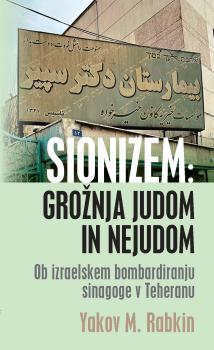
Sionizem: grožnja judom in nejudom. Ob izraelskem bombardiranju sinagoge v Teheranu
Iran is the home of the largest Jewish community in West Asia, and one of the oldest in the world. Iranian Jews are an integral part of society and enjoy full and equal political rights. On April 7, 2026, during the war of aggression against Iran, Israel bombed and utterly destroyed one of Tehran's synagogues. Yakov Rabkin, Professor Emeritus of History at the University of Montreal, explains this event with reference to Zionism. Zionism, a political movement that emerged in nineteenth-century Europe as a variation of colonialism and ethno-nationalism of the time, strove--with the support of anti-Semites--to establish a Jewish state in Palestine. As a Zionist entity, the Israeli State represents the Israeli State, but not all Jews. In particular, Zionism was alien to Arab Jews from Morocco through Palestine to Iraq, and to Jews of Iran, who had been, along with local Muslims and Christians, victims of Zionist terrorism from the beginning. Jewish opponents of Israeli violence regard Zionism as falling away from rabbinic Judaism and as a threat to Jews and non-Jews alike.
Downloads
Series
License

This work is licensed under a Creative Commons Attribution-NonCommercial-NoDerivatives 4.0 International License.