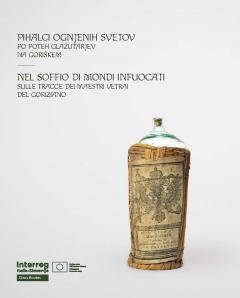
Pihalci ognjenih svetov / Nel soffio di mondi infuocati. Po poteh glažutarjev na Goriškem / Sulle tracce dei maestri vetrai del Goriziano
The regional identity of Goriška is shaped by a historically unified area whose origins date back at least to the year 1001, when Gorica was first mentioned in a deed of donation from the emperor to the Patriarch of Aquileia. Despite later political divisions, particularly in the 20th century, the region has retained a multilingual and culturally diverse character that has fostered cooperation and the interweaving of cultures. A notable example of these connections is the arrival of forest glassmakers – glassblowers from the Czech-German region – at the edge of the Trnovo Forest in the 18th century. Their activities demonstrate the integration of the Goriška region into broader European trade flows between the North and the Mediterranean. Glass products travelled via Lokve and Gorica to Trieste, and from there across the Mediterranean, to the Middle East, India, and America. The collection provides a comprehensive overview of the glassmaking industry in the Goriška region and is one of the outcomes of the Glass Routes project: from the broader historical context and natural environment to economic conditions, technological expertise, and the life stories of glassmakers. It pays special attention to connections with other glassmaking centres, including Venice (Murano), and presents the latest research and fieldwork.
The Glass Routes – Following the Paths of Glassmakers in the Goriška Region project has brought together research on tangible and intangible heritage on both sides of the border. In collaboration with research institutions, museums, and the local community, it has shed light on the area between Gorenja Trebuša, Lazna, and Lokve and examined archival materials in Italy. This shared heritage is now preserved in museums on both sides of the border, underscoring the necessity of cross-border cooperation. Through this project, we have made a significant contribution to understanding this once-thriving craft and have also expanded its cultural and tourism potential, including an artist residency in the village of Lokve and a network of themed trails winding through the Trnovski Forest.
Chapters
-
Exibition Catalog
Downloads
License

This work is licensed under a Creative Commons Attribution-NonCommercial-NoDerivatives 4.0 International License.